NewStori...First & Foremost A Quality News Outlet!
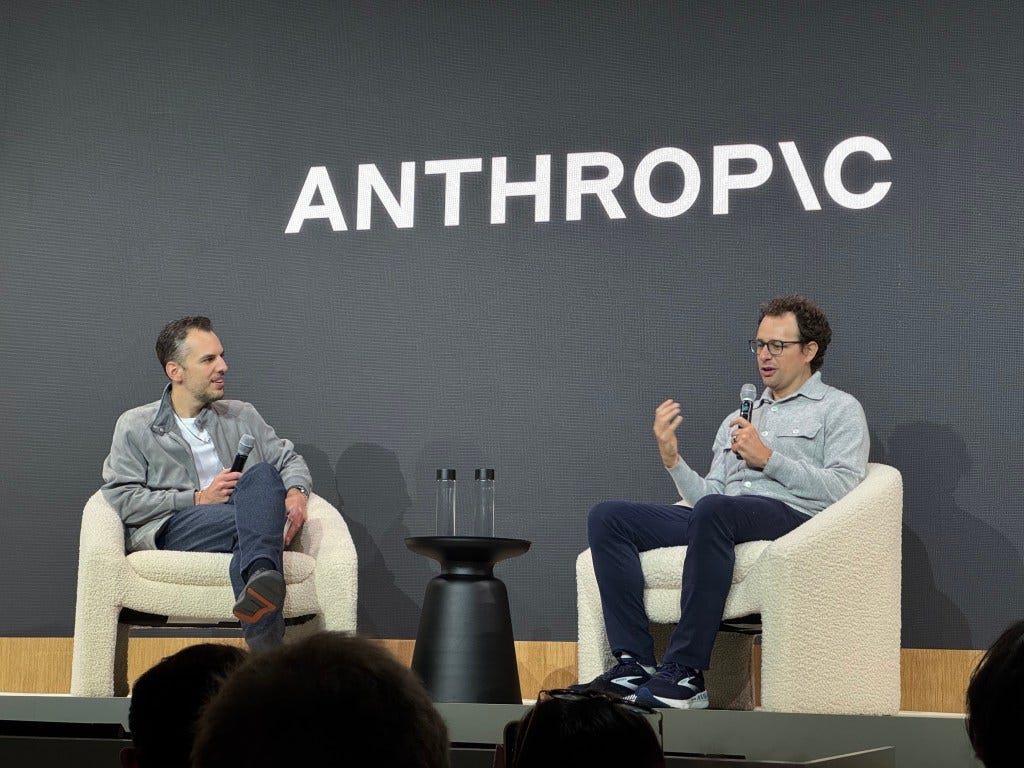
The rise of Anthropic represents one of the most consequential developments in the modern artificial intelligence landscape. Founded in 2021 by siblings Dario Amodei and Daniela Amodei along with a group of former AI researchers and engineers, Anthropic emerged from both optimism and concern about the future of advanced AI systems. Their path to success was shaped not only by technical brilliance but by ethical conviction, institutional friction, fundraising challenges, and a strategic belief that AI must be developed responsibly at scale. The hurdles they faced—and the way they crossed them—help explain why Anthropic is considered a central player in shaping the future of AI.
Origins Inside OpenAI
Before founding Anthropic, many of its core team members worked at OpenAI, one of the world’s leading AI research labs. Dario Amodei served as Vice President of Research, contributing to major breakthroughs in large language models and reinforcement learning systems. The team played critical roles in advancing scaling laws research, which demonstrated that increasing model size and training data often led to predictable improvements in performance.
However, as AI capabilities accelerated, internal debates intensified around governance, commercialization, and safety. The founding team became increasingly focused on alignment—the challenge of ensuring that powerful AI systems behave in accordance with human values and intentions. Concerns about the pace of deployment and long-term safety risks led several key researchers to depart and form a new organization centered explicitly on AI alignment research.
Leaving a high-profile institution was a significant hurdle. OpenAI had brand recognition, financial backing, and momentum. Departing meant forfeiting institutional stability and starting from scratch in a capital-intensive field. Yet the founding team believed that alignment research required deeper structural commitment and independent focus.
Establishing a Safety-First Mission
From its inception, Anthropic positioned itself as a safety-driven AI company. Its core philosophy emphasized “constitutional AI,” a method designed to guide large language models using explicit principles rather than relying solely on human feedback loops. This approach aimed to make models more transparent, controllable, and resistant to harmful outputs.
The hurdle here was conceptual as much as technical. Safety research is often viewed as slower or less commercially attractive compared to product deployment. Convincing investors that alignment-focused development could coexist with business growth required careful framing.
Anthropic’s founders argued that safety is not an obstacle to innovation but a prerequisite for sustainable progress. They believed that increasingly capable AI systems demand increasingly rigorous safeguards. This framing helped differentiate the company in a rapidly expanding AI marketplace.
The Capital Challenge
Training frontier AI models requires immense computational resources. Securing funding for such an endeavor is no small task. Unlike software startups that can operate leanly, AI labs must invest heavily in compute infrastructure, talent acquisition, and research.
Anthropic overcame this hurdle by attracting significant investment from major technology companies and venture capital firms. Strategic partnerships with cloud providers enabled access to large-scale computing resources. These partnerships allowed Anthropic to train its Claude series of AI models, positioning the company as a serious competitor in the generative AI space.
Raising billions of dollars in capital was both a milestone and a challenge. Large investments bring expectations for growth and productization. The founding team had to balance commercial viability with their safety-first ethos. Maintaining alignment as a central mission while scaling operations required disciplined governance structures.
Building Claude and Competing at the Frontier
Anthropic’s flagship AI system, Claude, entered a competitive landscape that included models from OpenAI and other global labs. The hurdle was clear: compete with established players while maintaining a distinct identity.
Anthropic leaned into reliability and safety as competitive advantages. Claude was designed to produce more predictable outputs and demonstrate improved resistance to harmful or biased content. Enterprises seeking AI tools for customer support, research assistance, and knowledge management found value in systems designed with guardrails.
Competing at the frontier also required rapid iteration. AI development cycles are intense, with breakthroughs emerging quickly. The founding team relied on deep expertise in scaling laws and model interpretability research to refine performance. Their scientific grounding enabled them to adapt to evolving benchmarks.
Organizational Culture and Governance
Another major hurdle was organizational design. AI labs face pressure to move fast, release products, and capture market share. At the same time, internal debate about safety, deployment thresholds, and societal impact is essential.
Anthropic adopted a governance structure intended to protect long-term safety goals. It incorporated mechanisms to limit short-term financial pressures from overriding mission commitments. This structure reflects lessons learned from prior experiences in fast-scaling AI organizations.
Balancing idealism with pragmatism remains a constant challenge. As AI systems grow more capable, public scrutiny intensifies. Regulatory discussions around AI transparency, bias mitigation, and risk management continue to evolve. Anthropic’s leadership must engage with policymakers while maintaining technological momentum.
Hurdles in Public Perception
The AI sector is increasingly polarized. Some view advanced AI as transformative and beneficial; others warn of existential risks. Anthropic operates within this tension.
One hurdle is managing expectations. Overhyping AI can erode trust if systems fail to meet promises. Undercommunicating progress risks falling behind competitors in perception. Anthropic has attempted to communicate cautiously, emphasizing incremental improvements and responsible deployment.
Another challenge involves talent competition. Top AI researchers are in high demand globally. Retaining world-class engineers while preserving a mission-driven culture requires both financial incentives and intellectual fulfillment.
Why Anthropic Matters to the AI Future
Anthropic’s significance lies in its integration of safety research with frontier model development. Many organizations focus either on academic safety theory or aggressive commercialization. Anthropic attempts to bridge both.
First, its research into constitutional AI and interpretability contributes to broader understanding of how large language models reason and respond. This work informs industry-wide best practices.
Second, its willingness to scale responsibly demonstrates that safety and capability can advance simultaneously. If successful, this model could influence how other AI companies structure governance.
Third, its partnerships with major cloud and enterprise platforms ensure that its systems are integrated into real-world applications. As AI becomes embedded in business workflows, reliability and controllability become paramount.
Finally, Anthropic’s founding team represents a generation of AI leaders shaped by firsthand exposure to rapid capability growth. Their experiences inside OpenAI gave them insight into both the promise and peril of scaling AI systems. That perspective informs strategic decisions about deployment thresholds and model transparency.
Crossing the Hurdles
The founding team crossed multiple hurdles through:
• Scientific Depth: Leveraging prior research expertise in scaling laws and reinforcement learning.
• Mission Clarity: Anchoring decisions in alignment principles.
• Strategic Fundraising: Securing large investments without abandoning governance safeguards.
• Partnership Building: Collaborating with cloud providers and enterprises.
• Cultural Discipline: Maintaining internal debate and ethical reflection amid growth.
Each phase required balancing ambition with caution. In a field characterized by exponential progress, that balance is difficult but essential.
Conclusion
Anthropic’s founding team transformed concern about AI alignment into an institutional mission. By leaving a leading lab to create a safety-focused frontier company, they embraced uncertainty in pursuit of long-term impact.
Through technical innovation, capital acquisition, and governance design, they positioned Anthropic as a pivotal force in AI development.
As artificial intelligence becomes more powerful and pervasive, organizations capable of combining capability with responsibility will shape its trajectory. Anthropic’s growth reflects both the urgency and the opportunity of this moment. Its founders’ willingness to confront structural hurdles—scientific, financial, and ethical—places the company at the center of debates about how AI should evolve.
In an era when AI systems increasingly influence communication, research, and decision-making, the question is no longer whether AI will shape the future, but how. Anthropic’s founding team has made it clear that safety and alignment must be foundational, not optional. That conviction may prove to be their most important contribution to the AI future.
Crowdfunding has become a powerful way for startups and growing companies to raise money from a wide base of investors and backers. With the rise of online platforms and regulatory changes that opened access to non-accredited investors, businesses now have multiple paths to raise capital—far beyond traditional bank loans and venture capital.
However, planning and executing a crowdfunding initiative legally and successfully requires careful preparation, understanding of regulations, strategic marketing, and financial transparency.
This guide will walk you through:
• What crowdfunding is and how it works
• Types of funding (donation, rewards, equity, debt)
• Legal and regulatory requirements
• Required paperwork and financial filings
• Hurdles and best practices for success
• Advantages and disadvantages
• DIY versus using crowdfunding platforms
What Is Crowdfunding?
Crowdfunding is a method of raising funds from a large number of people, typically through an online platform. Rather than seeking one or a few big investors, a company solicits smaller contributions from many supporters.
Crowdfunding can be broadly divided into:
1. Donation-Based Crowdfunding
Backers contribute without expecting financial returns. Example: raising funds for a community project.
2. Rewards-Based Crowdfunding
Backers receive non-financial rewards (products, services, acknowledgments). Example: funding a new gadget with early access perks.
3. Equity Crowdfunding
Backers become owners by buying shares or equity in the company.
4. Debt Crowdfunding (Peer-to-Peer Lending)
Backers lend money in exchange for repayment with interest.
Each type has different legal, financial, and administrative requirements.
Types of Funding: Seed, Series A, Series B, etc.
In the journey of startup fundraising, “crowdfunding” is usually one piece in a broader financial trajectory. Entrepreneurs should understand how it fits within typical funding stages:
Seed Funding
• Purpose: Initial capital to turn an idea into a product or service.
• Sources: Founders, friends and family, angel investors, early crowdfunding.
• Amount: Typically $10k–$2M, varies widely.
Crowdfunding often occurs at the seed stage, especially equity crowdfunding, to validate demand and raise initial capital.
Series A Funding
• Purpose: Scale product and market reach.
• Sources: Venture capital (VC) firms.
• Amount: Typically $2M–$15M.
After a successful crowdfunding and proof of traction, companies often pursue Series A.
Series B, C, and Beyond
• Purpose: Scale further, expand into new markets, acquisitions.
• Sources: Larger VC firms, institutional investors, strategic partners.
• Amounts: $10M–hundreds of millions.
Equity crowdfunding participation generally decreases as companies command higher valuations and turn to institutional investors.
Legal & Regulatory Framework
Crowdfunding may be subject to securities and consumer regulations, depending on the model.
Donation & Rewards Crowdfunding
Platforms like GoFundMe or Kickstarter typically do not involve securities. Contributors receive products or goodwill, so securities laws don’t apply.
However, companies must still avoid false advertising and ensure they can deliver promised rewards.
Equity & Debt Crowdfunding
When contributors receive financial returns (shares or interest), securities laws apply. In the U.S., the Securities and Exchange Commission (SEC) regulates offerings under rules such as:
• Regulation Crowdfunding (Reg CF)
• Regulation A+ (Reg A Tier 1 & 2)
• Regulation D (including Rule 506(b) & 506(c))
These rules dictate how much you can raise, who you can accept funds from, and what disclosures you must provide. Key differences include:
Rule Max Raise Accredited Investors? Disclosure Requirements
Reg CF Up to ~$5M/year No (all investors) Form C, financials
Reg A+ Tier 2 Up to ~$75M No limits Tiered disclosures & audited financials
Reg D 506(b/c) Unlimited Accredited only Form D filing
Note: Amount limits change periodically; always verify current caps with regulatory sources.
Required Paperwork and Filings
Depending on your crowdfunding model and regulation used, you must prepare:
For Reward & Donation Crowdfunding
• Campaign description and terms
• Reward fulfillment plans
• Marketing materials
You typically won’t file with securities regulators, but you should keep clear records for taxes and compliance.
For Equity or Debt Crowdfunding
You’ll likely need to prepare and file:
1. Offering Documents
Depending on the regulation, this may include:
• Form C (Reg CF)
• Offering Circular (Reg A+)
• Private placement memorandum (for Reg D 506(b))
These documents contain:
• Business description
• Management team bios
• Risk factors
• Use of proceeds
• Financial statements
2. Financial Statements
Regulators require financial transparency:
• Reg CF: May require reviewed or audited financials beyond certain thresholds.
• Reg A+: Requires financial statements, often audited.
• Reg D: Less formal disclosure, but investor expectations often still demand strong financial transparency.
3. Form D Filing
For Reg D offerings (506(b) / 506(c), even if not public), you must file Form D with the SEC within 15 days after the first sale of securities.
4. State Filings
Many states require Blue Sky filings for securities offerings.
Company Financials: What Investors Care About
Financial transparency is crucial for trust and compliance.
Balance Sheet
Shows company assets, liabilities, and equity.
Income Statement
Tracks revenue, expenses, and profitability.
Cash Flow Statement
Reveals how money moves in and out of the business.
Financial Ratios
Investors analyze:
• Burn Rate: How quickly the company uses cash.
• Runway: Time before funds run out.
• Gross Margin: Profitability per unit.
• Valuation Metrics: Helps price equity shares fairly.
Strong, honest financial reporting increases credibility and investor confidence.
Hurdles and Challenges
Crowdfunding success isn’t just about launching a campaign—there are multiple challenges:
1. Regulatory Complexity
Equity crowdfunding involves compliance with securities laws, disclosure requirements, and ongoing reporting in some cases.
Missing filings or misstatements can lead to fines or enforcement action.
2. Marketing and Visibility
A successful campaign needs significant promotion:
• Social media
• Email lists
• PR outreach
• Influencers and community engagement
Without visibility, many campaigns fall short of their goals.
3. Delivering on Promises
For reward crowdfunding, failing to deliver promised products or rewards can damage reputation and lead to legal problems.
4. Financial Preparation
Investors demand accurate and detailed financials. Many startups struggle to produce regulated financial statements without professional accounting help.
5. Platform Selection
Choosing the wrong platform or model can lead to missed funding potential or higher costs.
Advantages of a Successful Crowdfunding Initiative
Crowdfunding offers several benefits:
1. Access to Capital Without Traditional Investors
Small companies can raise funding without VC or bank involvement.
2. Market Validation
Strong crowdfunding interest often signals product-market fit and builds early user communities.
3. Brand Exposure
Campaigns often generate publicity and brand awareness before a formal product launch.
4. Diverse Funding Options
Unlike traditional funding, crowdfunding allows a mix of:
• Donations
• Rewards contributions
• Equity investment
• Debt financing
5. Investor Community
Equity crowdfunding builds a base of engaged supporters who may become repeat customers or advocates.
Disadvantages and Risks
Crowdfunding has its downsides:
1. Cost and Fees
Platforms charge fees (5–10% is common), plus payment processing fees.
2. Time and Effort
Campaigns require significant planning, marketing, and back-end work.
3. Regulatory Compliance
Equity crowdfunding adds complexity and ongoing disclosures that can be expensive.
4. Risk of Failure
If your campaign doesn’t reach its goal, you may not receive any funding (especially on all-or-nothing platforms).
5. Reputation Risks
Missed deadlines or underdelivery on rewards can harm long-term reputation.
DIY Crowdfunding vs. Using a Platform Like StartEngine or GoFundMe
Your crowdfunding success largely depends on how you structure and host the campaign.
DIY Crowdfunding
If you run your own campaign (e.g., on your website):
Pros:
• Full control over branding and terms
• Lower platform fees
• Full access to supporter data
Cons:
• Must build your own payment and compliance infrastructure
• Higher technical and legal burden
• You’re responsible for security and fraud prevention
DIY is more common in rewards crowdfunding for smaller campaigns.
Using a Platform
Online platforms provide tools, traffic, compliance support, and built-in audiences.
Examples
• StartEngine: An equity crowdfunding platform designed for Reg CF and Reg A offerings.
• GoFundMe: A donation-based crowdfunding platform for personal, charitable, or creative campaigns.
Pros:
• Built-in user base and visibility
• Compliance support and legal infrastructure
• Secure payment processing
• Campaign templates and support teams
Cons:
• Platform fees
• Less control over user data
• Competition with other campaigns
Platforms like StartEngine also help with investor accreditation checks, regulatory filings, and escrow services.
Best Practices for a Successful Campaign
No matter the model, here are tips that increase your chances of success:
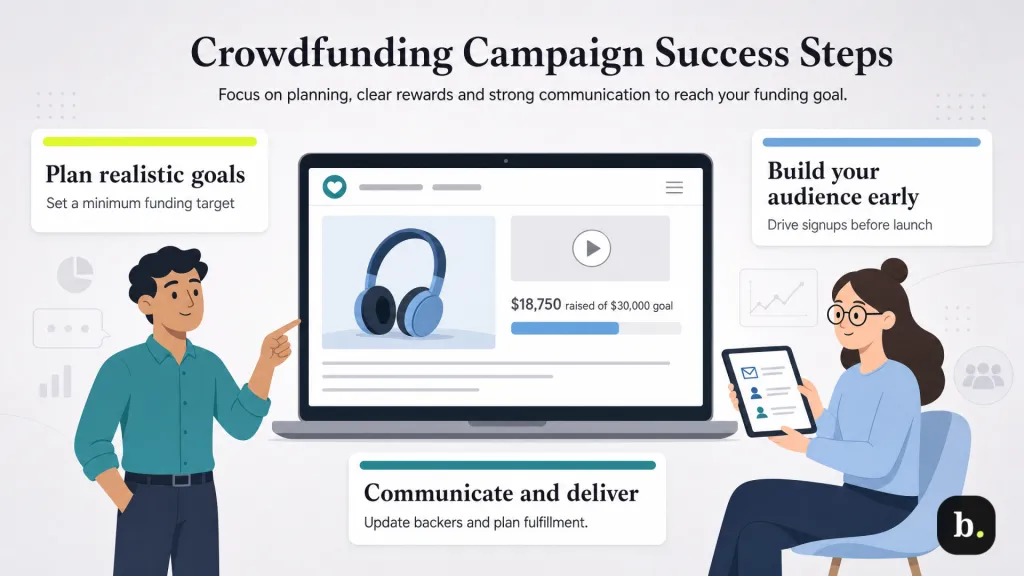
1. Prepare Early
Start building your audience before launching.
2. Tell a Compelling Story
Explain why your project matters and what problem it solves.
3. Be Transparent
Clearly share your financial situation, risks, and plans for using funds.
4. Create Attractive Rewards or Equity Terms
For reward crowdfunding, offer meaningful perks.
For equity crowdfunding, price shares fairly with realistic valuation.
5. Communicate Consistently
Provide campaign updates and engagement—donors and investors want regular progress reports.
6. Ask for Help
Professional legal, accounting, and marketing advisors can help you avoid costly mistakes.
Conclusion
A successful and legal crowdfunding initiative can be transformative for a company—providing capital, community support, brand exposure, and validation. But it’s not a shortcut: it involves careful planning, legal compliance, strategic marketing, and financial accountability.
Whether you choose donation, rewards, or equity crowdfunding—or pair crowdfunding with later seed, Series A, or growth rounds—the key is:
Be prepared, be transparent, and build trust.